Repair or Replace, Honestly
A roof that leaks in three places feels like a roof that has come to the end of its life. Usually it has not.
Three leaks on a tiled roof is often three separate small faults: a cracked ridge, a slipped tile, a failed flashing at the chimney. Each is a modest repair. Together they feel like a failing roof, and quoting a full replacement is easy money for anyone willing to take it.
Replacement is genuinely the right call when the structure is compromised, when the underlay across the whole roof has perished, when corrosion has perforated sheeting extensively, or when repeated repairs have already cost more than half a replacement would.
We will tell you which category yours is in, including when the answer means a much smaller invoice for us. That is not generosity, it is how we would want to be treated on our own house.
What We Repair
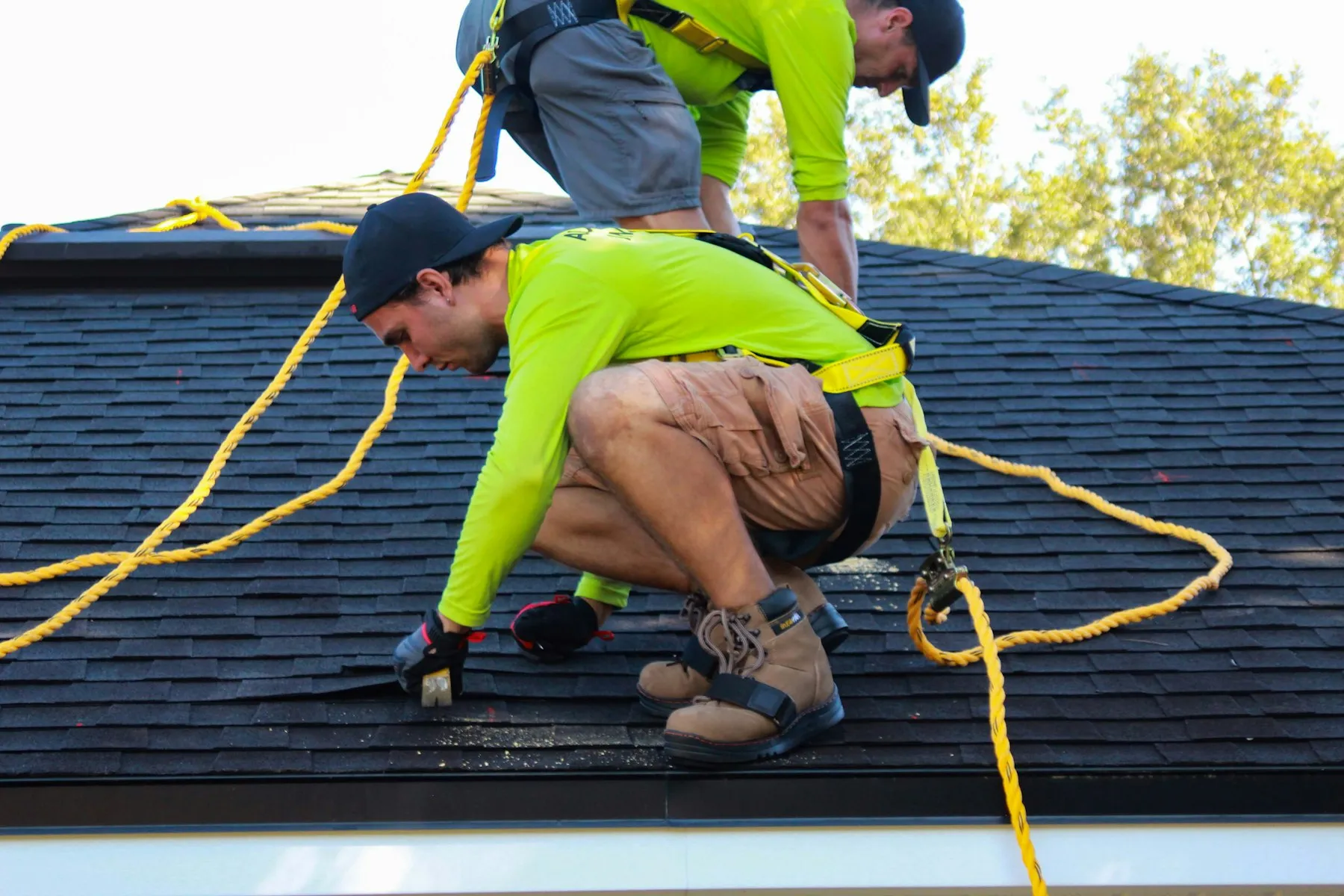
Tiled roofs. Cracked and slipped tiles, ridge and hip re-bedding and re-pointing, valley repairs and replacement, flashings at walls and chimneys, underlay repairs.
Metal roofs. Fixing replacement, lap sealing, flashing rework, sheet replacement where corrosion has perforated, and treatment of surface rust.
Concrete and flat roofs. Membrane repairs, upstand and outlet detailing, screed and falls correction, concrete repair where the slab is spalling.
Structural. Sagging or damaged timbers, purlins and battens, and water-damaged ceilings once the source has been stopped.
Gutters and downpipes, because roof water that does not leave properly ends up back in the building.
Why Repairs Fail and Get Blamed on the Roof
Most repeat leaks we attend are not new faults. They are old faults repaired in the wrong place.
Water entering at a ridge can run several metres along a batten before it drops through the ceiling. The repair gets done above the stain, the stain is where the water lands, and the entry point is untouched. It rains again and everyone concludes the roof is beyond saving.
This is why we find the entry point first rather than repairing the visible damage. It is also why a roof that has had three failed repairs is often still a repairable roof.
What Cape Town Winter Does to a Roof
Roughly 70% of the annual rainfall arrives between June and September, on north-westerly cold fronts at 50 to 65kph. That combination, high volume and high wind, is what turns a minor fault into a leak.
Water driven horizontally goes places gravity would never take it: up under tile overlaps, behind flashings, over the top of upstands. A roof that was watertight through a mild autumn shower fails in the first serious front.
The summer south-easter does the preparation work. It is dry, so it causes no leaks directly, but it lifts poorly bedded ridge tiles, works at loose sheet fixings, and abrades exposed edges. Everything it loosens in December leaks in June.
Which is why we recommend having repairs done in March and April rather than waiting for the leak to prove itself.