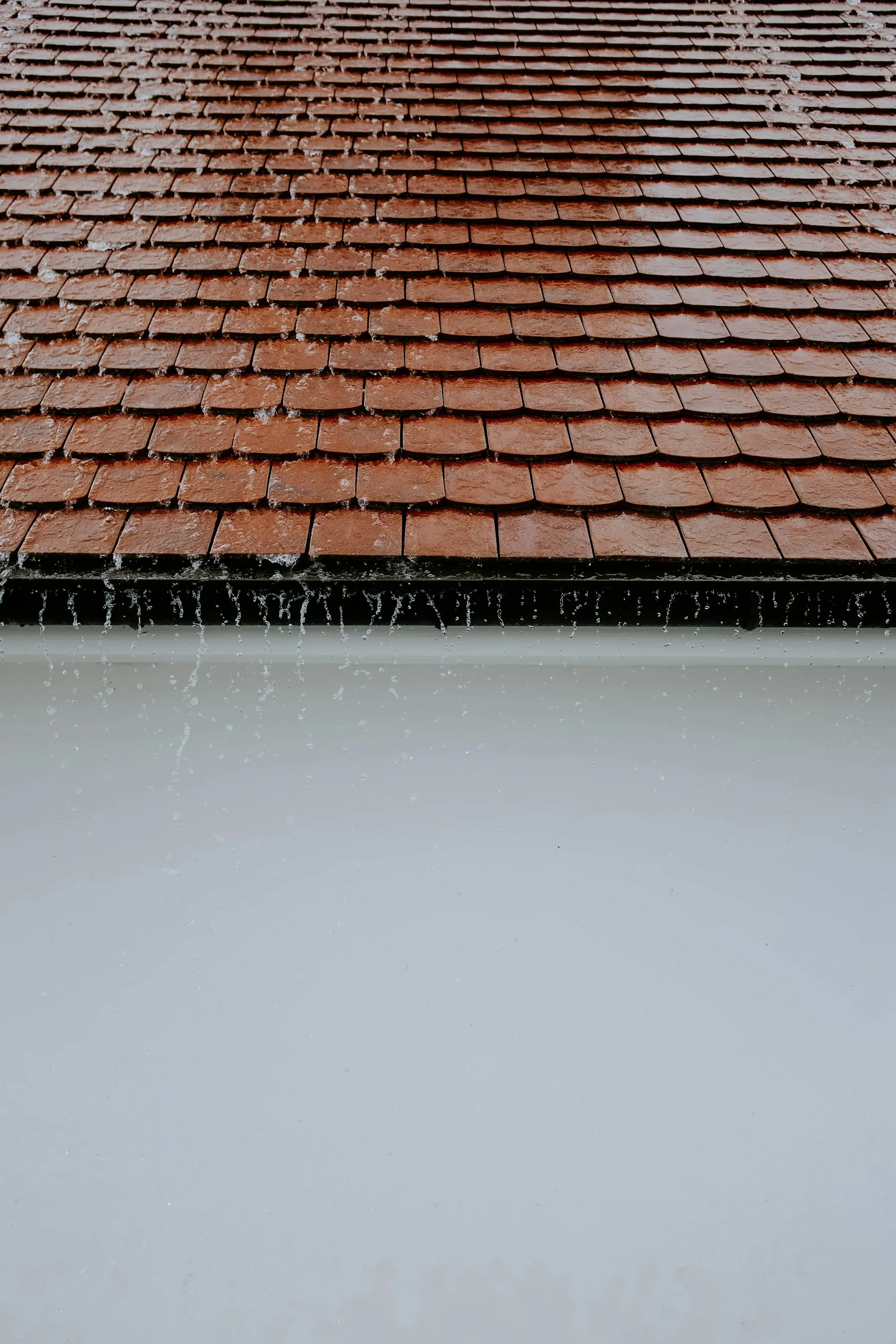
Rainwater running across a roof surface

Leak Detection Cape Town

Leak detection in Cape Town starts with accepting that the stain on your ceiling is not the leak. Water travels along beams and battens before it drops. We find the entry point, not the exit. Two-year written guarantee.

Why Most Leak Repairs Do Not Hold

A ceiling stains in the corner of a bedroom. A contractor goes up, finds a cracked tile roughly above it, replaces the tile, and invoices. Two months later the stain is back.

Nothing was done wrong except the assumption. Water entering a roof does not fall straight down. It runs along the top of the underlay, down a batten, across a purlin, along the top of a beam, and drops at the first point where something interrupts the run. That point can be several metres from where it came in, and on a different part of the roof entirely.

So the visible damage tells you where the water finished, and almost nothing about where it started. Repairing at the stain is repairing the exit.

This is the single most common reason for repeat leaks, and it is why we treat detection as a separate discipline rather than something you do on the way to a repair.

The Leak Is Almost Never Where the Damage Is

Finding the entry point is a process of elimination, done in a sequence.

Inside first. The roof void tells you more than the roof does. Water tracks leave marks on timbers, and following those marks upslope narrows the search dramatically before anyone gets on the roof.

Moisture mapping. A moisture meter across a ceiling or wall shows the true extent of wetting, which is usually much larger than the visible stain, and shows the direction the water came from.

Thermal imaging. Evaporating moisture cools a surface, so wet areas read differently on a thermal camera. It does not see water directly, it sees the temperature difference, which means it works best under the right conditions and is one input rather than an answer on its own.

Flood testing. Sections of the roof are isolated and water applied in a controlled sequence, starting at the lowest point and working up. When the leak appears, the section that produced it is the section that leaks. Slow, methodical, and conclusive.

Elimination of the other sources. Not every ceiling stain is a roof. Condensation, plumbing, a leaking balcony above, and blocked gutters overflowing behind a fascia all present as roof leaks and are not.

What Usually Turns Out to Be the Cause

Flashings. Where the roof meets a wall, a chimney, a parapet or a dormer. The most common single source we find.

Ridges and valleys. Cracked bedding, missing pointing, corroded or debris-blocked valleys.

Failed underlay. Where the underlay has perished, water that gets past the tiles has nothing stopping it. Common on older Cape Town roofs.

Blocked gutters and valleys. Overflow going backwards behind a fascia board, entering at the wall plate. Presents exactly like a roof leak.

Balconies above. In apartment blocks, the leak in your ceiling is very often the balcony of the flat upstairs.

Condensation. Not a leak at all. Cape Town homes largely have no central heating, so winter condensation in an unventilated roof void or on a cold wall produces damp patches routinely mistaken for ingress.

Horizontal Rain Makes Cape Town Harder

Cape Town winter rain arrives on north-westerly fronts at 50 to 65kph. Rain moving sideways enters at points vertical rain never reaches: under tile overlaps, behind flashings, over upstand terminations, through a gap in a barge board.

That widens the search area considerably compared to a low-wind region. It also explains the most common thing homeowners tell us, which is that the roof only leaks in a storm. A fault that needs 60kph of wind behind the rain to become a leak is invisible for most of the year.

It is also why a leak that appeared in June was often caused by something the December south-easter loosened.


How It Works

  1. 1

    Free site inspection

    Roof void examined, moisture mapped, likely entry points identified.

  2. 2

    Written quote before further work

    Detection is quoted separately from any repair, so you are never paying for a repair to justify the investigation.

  3. 3

    Detection carried out

    Using the appropriate methods for the roof, with findings photographed.

  4. 4

    Repair quoted, not assumed

    You get told what was found and what it will take to fix, with no obligation to have us do it.

What Leak Detection Costs

  • The methods needed.A visual inspection of a roof void is quick. A controlled flood test over a large flat roof is a day work.
  • Building type.A single-storey house is straightforward. Tracing a leak through three floors of an apartment block is not.
  • Access.Height, roof void access and whether ceilings are reachable.
  • Whether the source is obviousonce we are in the roof void, which it sometimes is.

We quote detection separately from repair, deliberately. You should be able to find out what is wrong without committing to who fixes it.

Get a written quote

Why Choose Us

  • We inspect before we quote

    Nobody prices a roof from a photograph or a phone call. We get on the roof or into the roof void, establish what is actually wrong, and quote from that.

  • Preparation is quoted separately

    Substrate repair, falls correction and strip-off appear as their own line items. That is the part that determines whether the work lasts, and the part most quotes hide.

  • We say when repair is the cheaper answer

    Plenty of roofs quoted for replacement need a day of repairs. We tell you which yours is, including when it means a smaller invoice for us.

  • Two-year written guarantee, in writing

    Minimum two years on our workmanship, with the scope set out on the quote before you sign. We check the work again after the first winter.

Leak Detection FAQs

How much does leak detection cost in Cape Town?

It depends on the methods needed and the building. A visual inspection of an accessible roof void is quick. A controlled flood test on a large flat roof is a day. We quote detection separately from any repair.

Why is the leak not directly above the stain?

Because water runs before it drops. It travels along underlay, battens, purlins and beams until something interrupts the run, sometimes several metres from where it entered. The stain marks the exit.

Do you do pool leak detection?

No. We work on roofs, walls and buildings, not swimming pools. A pool specialist or a plumber is the right call for that.

Can you detect a leak without breaking anything open?

In most cases yes. Roof void inspection, moisture mapping, thermal imaging and controlled flood testing are all non-destructive. Occasionally a small opening is needed to confirm, and we agree that with you first.

Does thermal imaging actually find leaks?

It finds temperature differences caused by evaporating moisture, which is not the same as seeing water. It is a useful input alongside moisture mapping and flood testing, not a magic camera that points at the hole.

My ceiling only stains in heavy rain. Can you still find it?

Yes, and that pattern is a clue in itself. It usually means a fault that needs wind-driven rain to become a leak, which points to flashings, tile overlaps or upstand terminations. Flood testing reproduces it on demand.

Could my damp patch be condensation rather than a leak?

Very possibly. Most Cape Town homes have no central heating, and winter condensation in an unventilated roof void or on a cold external wall looks like ingress. Moisture mapping and the pattern of wetting distinguish them.

I live in a flat and my ceiling is leaking. Is it the roof?

Often it is the balcony or bathroom of the flat above rather than the roof, particularly if you are not on the top floor. That matters for who is responsible, so establishing it properly is worth doing.

Do I have to use you for the repair?

No. Detection is quoted and invoiced separately, and you get the findings in writing with photographs whether or not you use us afterwards.

Free inspection, written quote, no obligation

We come out, establish what is actually wrong, and put it in writing with preparation costed separately from the waterproofing.

  • We inspect before we quote, on the roof or in the roof void
  • Preparation and substrate work itemised separately
  • Two-year written guarantee
  • A check after the first winter
068 890 3548

Request a quote

Tell us what is happening and we will arrange the inspection.

No charge for the inspection, and no obligation.

Call for a free inspection