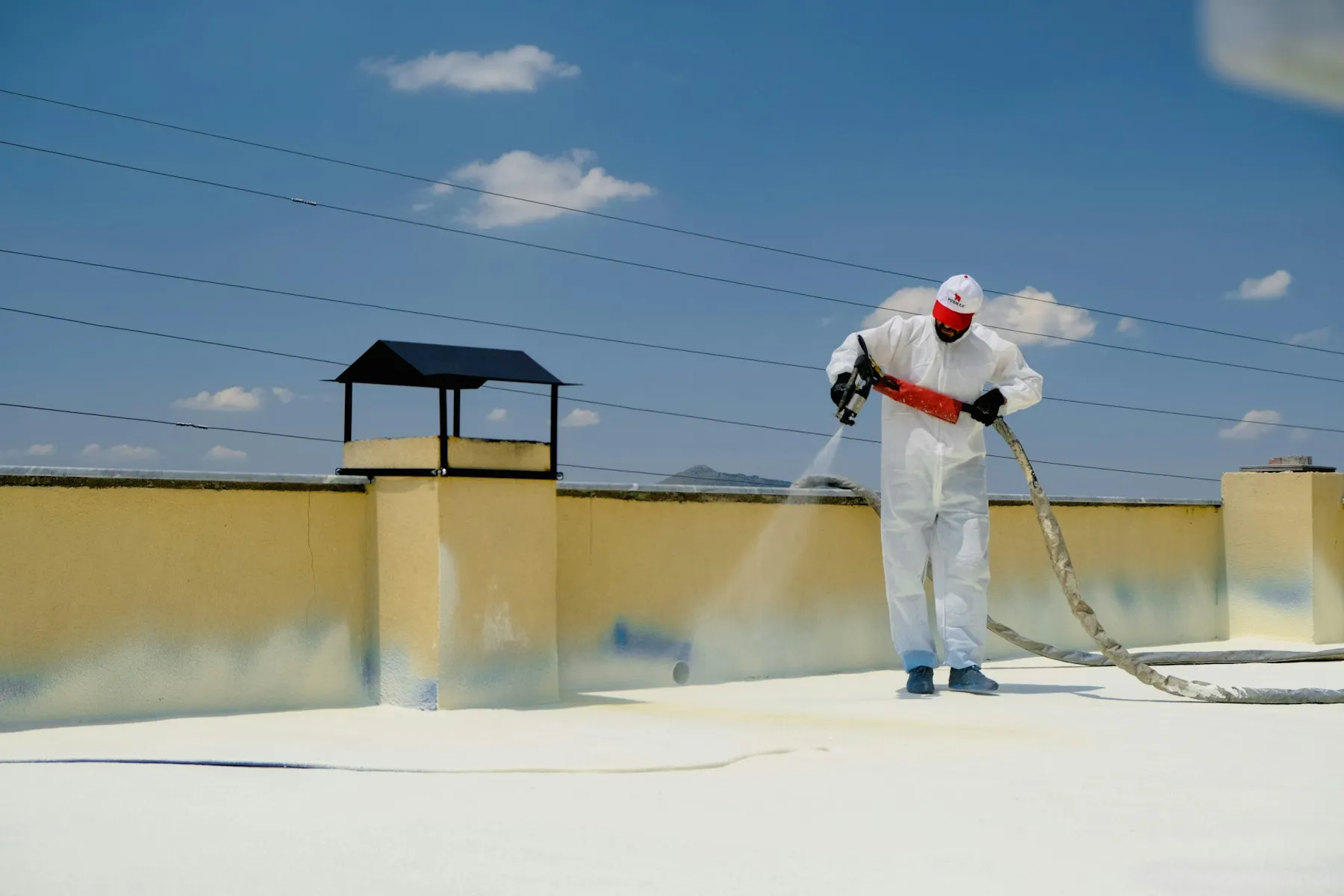
A waterproofer applying a coating to a flat concrete roof with parapet upstands

Roof Waterproofing Cape Town

Roof waterproofing in Cape Town goes wrong when the system is chosen by price instead of by roof. A concrete deck and a tiled pitch need different answers. Free inspection, written quote, two-year written guarantee.

  • 18 years in trade
  • Two-year written guarantee
  • Free inspection

Why Most People Get This Decision Wrong

Homeowners ring around for a price per square metre. Three contractors quote, the cheapest wins, and the same roof leaks again in four winters.

The problem is that a price per square metre only makes sense once the system is settled, and the system is settled by the roof. A flat concrete deck holding water for two days after rain has nothing in common with a tiled pitch shedding it in minutes. Applying the same product to both means one of them is wrong.

Before anything else, the roof needs looking at. What it is made of, where the water goes, what has already failed and why.

The System Depends on the Roof, Not the Price

Concrete decks and flat roofs. These hold water. They need a membrane that tolerates standing water and a substrate that falls to an outlet. Torch-on is the workhorse here. Liquid systems suit decks with many penetrations.

Tiled pitched roofs. These are drainage systems, not sealed ones. The waterproofing is the underlay beneath the tiles, plus sound bedding and pointing at ridges and valleys. Coating a tiled roof to waterproof it is the wrong instinct and usually traps moisture.

Metal roofs. Sheeting rarely fails first. The fixings do, and then the laps and flashings. A metal roof usually needs fixings addressed and a flexible coating that moves with thermal expansion.

Balconies, podiums and walkable decks. These need a membrane that survives foot traffic and tiling over the top, with falls to a drainage outlet.

Get the roof type right and the product choice follows. Get it wrong and no product saves you.

What Actually Fails

Almost never the middle of the sheet or the middle of the coating. Failures cluster at:

  • Upstands and parapets, where the membrane meets a vertical and was terminated short
  • Outlets, which carry the most water for the longest
  • Laps and joints, where the bond was partial
  • Penetrations, every pipe, vent, aerial mount and plant plinth
  • The substrate, where a sound membrane sits on failing concrete

This is why we quote preparation separately. It is the part that determines whether the waterproofing lasts, and the part most quotes hide.

The Cape Town Rain Window

Roughly 70% of Cape Town’s annual rainfall falls between June and September, and it arrives on north-westerly cold fronts at gales of 50 to 65kph. That is rain moving sideways.

Sideways rain tests verticals. Parapets, upstands, flashings and terminations take water that vertical rain never reaches, which is why detailing on the vertical surfaces matters more here than the flat field does.

The summer south-easter is dry and does a different kind of damage. It lifts anything poorly bonded and abrades exposed edges. A partially bonded lap survives winter and peels in December.

Most waterproofing systems need a dry substrate, so March and April are the right months to book work, not the middle of a June storm.

How It Works

  1. 1

    Free site inspection

    We get on the roof, check falls, probe for trapped moisture, examine laps, upstands, outlets and flashings.

  2. 2

    Written quote before work starts

    Substrate repair and preparation quoted separately from the waterproofing itself.

  3. 3

    Installation

    System specified for the roof, all detailing worked by hand.

  4. 4

    Guarantee and follow-up

    Two-year written guarantee, plus a check after the first winter.

What Roof Waterproofing Costs

We do not publish a rate per square metre, because the membrane is rarely the expensive part of the job. What moves the number is this.

  • Roof type and system specified.A single-layer coating and a two-layer torch-on build-up are different jobs.
  • Substrate condition.Sound screed needs priming. Failed screed or spalling concrete needs repair first, quoted separately.
  • Access.A third-floor City Bowl roof with no lift access costs more to reach than a garage roof.
  • Detailing count.Ten penetrations and three parapets is not a clean rectangle.
  • Strip-off and disposalof failed layers.

Anyone quoting from a photograph is guessing.

Get a written quote

Why Choose Us

  • We inspect before we quote

    Nobody prices a roof from a photograph or a phone call. We get on the roof or into the roof void, establish what is actually wrong, and quote from that.

  • Preparation is quoted separately

    Substrate repair, falls correction and strip-off appear as their own line items. That is the part that determines whether the work lasts, and the part most quotes hide.

  • We say when repair is the cheaper answer

    Plenty of roofs quoted for replacement need a day of repairs. We tell you which yours is, including when it means a smaller invoice for us.

  • Two-year written guarantee, in writing

    Minimum two years on our workmanship, with the scope set out on the quote before you sign. We check the work again after the first winter.

Roof Waterproofing FAQs

How much does roof waterproofing cost in Cape Town?

It depends on the roof type, the system specified, substrate condition and access. The membrane is the smaller part of most quotes. We inspect first and quote in writing with preparation costed separately.

Which waterproofing system is best for my roof?

There is no best system in the abstract. Concrete decks usually want torch-on or a liquid membrane. Tiled roofs want sound underlay, bedding and pointing. Metal roofs want fixings addressed and a flexible coating. The roof decides.

How long should roof waterproofing last?

A correctly specified and correctly detailed system should give you well over a decade. A badly detailed one can leak in its second winter. Installation quality matters more than product brand.

Can you waterproof a roof that is already leaking?

We find the leak first. Covering an active leak traps water under the new system, which blisters and fails. Leak detection comes before waterproofing.

Do you have to remove the old waterproofing?

Sometimes. A sound, well-bonded existing layer can be overlaid. A blistered or delaminating one comes off, along with anything holding trapped moisture. We tell you which after the inspection.

Can roof waterproofing be done in winter?

Repairs, yes. Full installations need a dry substrate, which a Cape Town winter often will not give you. March and April are the better months.

Does roof paint waterproof a roof?

No. Roof paint is a coating for appearance and some UV protection. It is not a waterproofing system and will not bridge a crack or hold water on a flat deck.

Why did my last roof waterproofing fail?

In most roofs we inspect, the field is intact and the failure is at an upstand, an outlet or a lap. Membrane terminated short at a wall is the single most common cause we find.

What does the guarantee cover?

Two years minimum, in writing, on our workmanship. Scope is set out on the quote before you sign.

Free inspection, written quote, no obligation

We come out, establish what is actually wrong, and put it in writing with preparation costed separately from the waterproofing.

  • We inspect before we quote, on the roof or in the roof void
  • Preparation and substrate work itemised separately
  • Two-year written guarantee
  • A check after the first winter
068 890 3548

Request a quote

Tell us what is happening and we will arrange the inspection.

No charge for the inspection, and no obligation.

Call for a free inspection