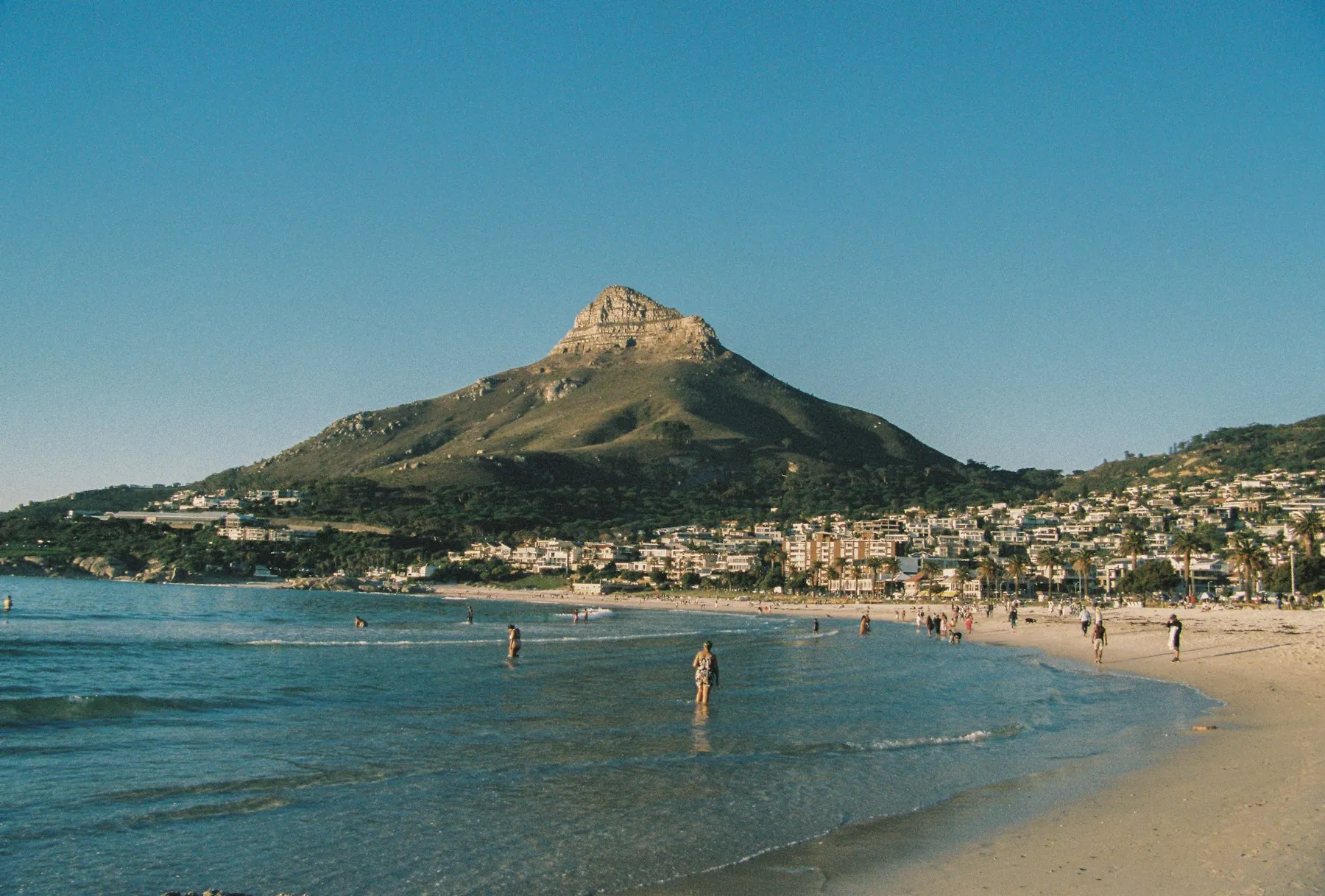
The Water Comes in at the Doors, Not the Roof
Most Camps Bay leaks we attend are not roof leaks.
Winter rain here arrives on north-westerly cold fronts, off the open Atlantic, at 50 to 65kph with higher gusts. That rain is not falling, it is travelling horizontally. And a Camps Bay house is typically designed to face exactly that direction, with large sliding doors, wide glazed elevations and terraces opening to the sea view.
Horizontal rain at pressure behaves nothing like vertical rain. It gets pushed upward under sliding door tracks, sideways into the junction between a frame and the wall, and through any gap in a sealant bead that would never leak under gravity alone.
Sliding door tracks are the single most common entry point we find. The track drainage is designed to shed water that falls into it, not water being driven under it at pressure from outside. Once the perimeter silicone has perished under UV, which happens quickly on a sea-facing elevation here, the seal is gone.
Frame-to-wall junctions. The interface between an aluminium frame and the surrounding masonry or render is a movement joint, and movement joints need a sealant that stays flexible. Cape Town UV on a west-facing elevation is brutal on sealant.
Threshold levels. Where a terrace or balcony surface has been re-tiled and raised, the finished external level can end up too close to, or above, the internal floor level. Driving rain then has an easy path.
Parapets and copings on flat-roofed contemporary houses, exposed on both faces to the same driven rain.
So when we inspect a Camps Bay house that leaks near a window or a door, we start at the junction and work outward, rather than assuming the roof.
Sun, Salt and Sealant
Camps Bay puts a building under an unusual combination of loads, and they interact.
UV. West-facing elevations take the full afternoon sun, and the sun here is strong. Sealants, gaskets and exposed coatings degrade far faster on this aspect than on a sheltered one. A silicone bead that would last a decade elsewhere can be chalky and cracked in a few seasons.
Salt. The Atlantic frontage means continuous salt deposition. It corrodes metal fixings, balustrade bases, handrail sockets and any exposed steel, and it works into concrete over time in the same way it does in Sea Point.
The summer south-easter. Camps Bay sits below the Twelve Apostles ridge, and the south-easter coming over that ridge accelerates and comes down in strong, gusty conditions. It is dry, so it causes no leaks directly. What it does is lift, work at and abrade anything not properly fixed, then leave it ready for the first winter front to exploit.
The cycle is the point. Summer wind and UV degrade the seals. Winter fronts test them. Everything that failed in December leaks in June.
Decks, Terraces and What Sits Below Them
Camps Bay houses are built on a slope and are typically stepped, which means outdoor space on one level sits directly above habitable space on the next.
That makes every terrace and deck a roof. When one fails, the water arrives in the room below rather than running off the edge where somebody would notice it.
Tiled terraces rely on a membrane under the tiles, not on the tiles. Grout is not waterproof, and where the membrane has failed no amount of re-grouting or sealing helps.
Falls and drainage. A terrace must fall away from the building to an outlet. Re-tiling jobs frequently level a surface that used to fall, and then water sits at the threshold permanently.
Timber decks over habitable space need the waterproofing beneath the deck structure, not the deck boards themselves. Every fixing through the membrane is a penetration.
Pool surrounds and water features on the same levels add a permanent water source over occupied space.