The Sheeting Is Usually Fine
Walk a leaking metal roof in Cape Town and the sheets themselves are often in reasonable condition. Chromadek and galvanised profiles are durable, and the coating on a decent sheet lasts a long time.
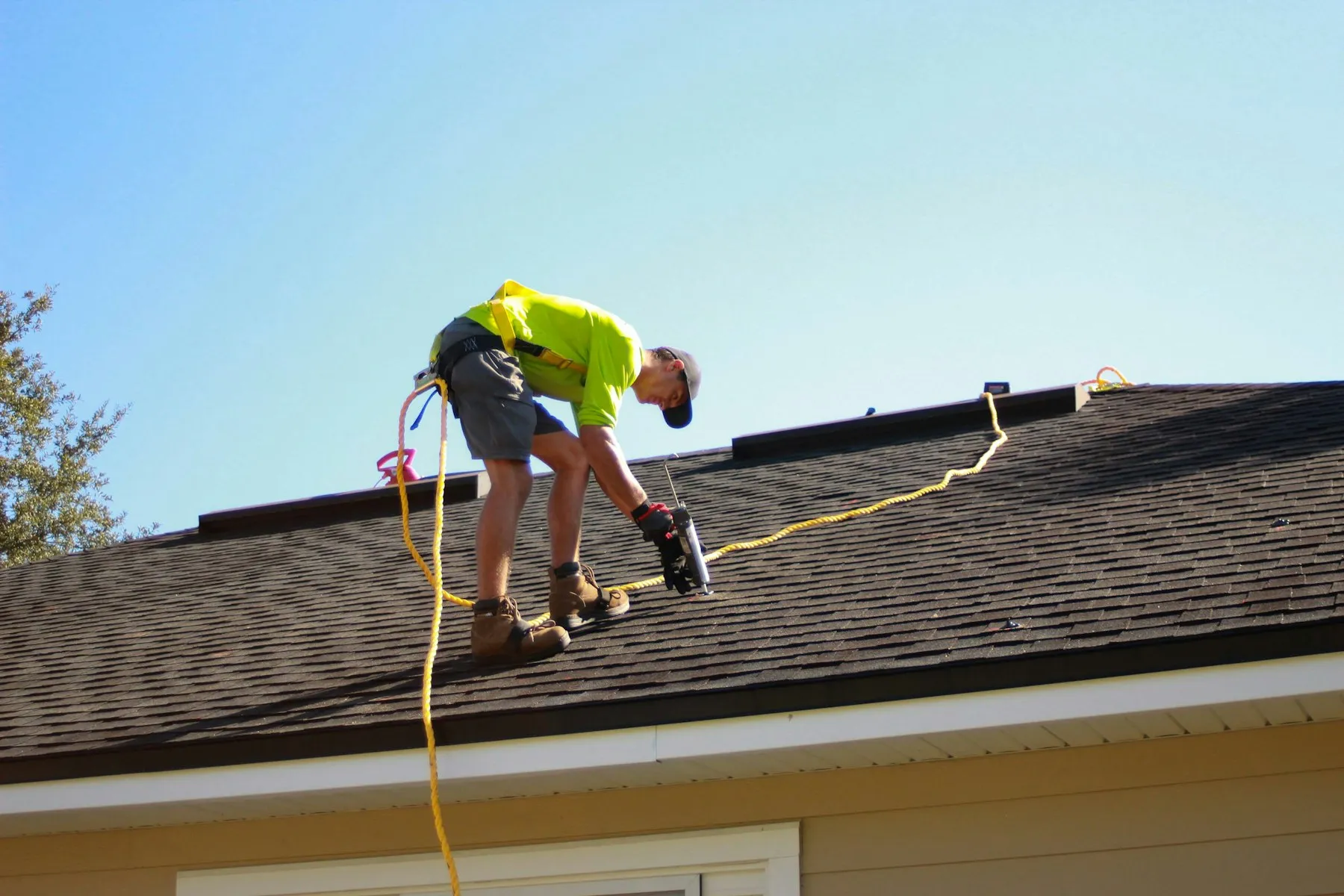
The problem is that a metal roof is held down by hundreds of screws, and every screw is a deliberate hole punched through the waterproof layer. Each one relies on a small rubber or EPDM washer to seal it.
Those washers are the shortest-lived component on the entire roof. UV hardens them, thermal movement works them loose, and once a washer has perished the screw hole is an open path for water. On a roof with three hundred fixings, you do not need many failures.
Fixings Corrode Before the Sheeting Does
There is a second mechanism, and it is specific to the coast.
Galvanic corrosion. When two dissimilar metals sit in contact with moisture between them, one corrodes preferentially. Use the wrong screw on the wrong sheeting and the fixing eats itself while the sheet stays perfect. Salt-laden air is an electrolyte, so this runs much faster near the Atlantic.
Over-tightening. A screw driven too hard deforms the sheet around it and crushes the washer flat, which stops it sealing and creates a small pond around the fixing. Under-tightening leaves it loose. Both fail.
Fixing into the wrong place. On corrugated sheeting, fixings belong on the crown of the profile, not in the valley where water runs.
Laps. Side laps and end laps need proper overlap and, on low-pitch roofs, sealing tape within the lap. Wind-driven rain gets pushed uphill through an unsealed end lap.
Flashings. Ridge, barge, apron and valley flashings, and every point where the roof meets a wall. This is where most of the remaining leaks live.
So the answer on a metal roof usually is not to coat the whole thing. It is to replace fixings, seal laps, sort flashings, and then coat if a coating is genuinely warranted.
Salt, Sun and Thermal Movement
Cape Town gives a metal roof three things to deal with at once.
Coastal salt is the corrosion driver, and it reaches well inland on the wind. Table View, Blouberg, Milnerton and the whole Atlantic Seaboard sit in it permanently. Cut edges, scratches and fixing points are where corrosion starts, because that is where the protective coating is broken.
Thermal movement. Metal sheets expand and contract significantly between a summer afternoon and a winter night. Every cycle works at fixings and laps. Any coating on a metal roof has to stay flexible through that, which rules out brittle products.
The summer south-easter. Dry, so it will not put water in, but it lifts sheet edges with failed fixings and abrades coatings with wind-carried sand. It also finds any sheet that is not properly held down, which is a safety matter as much as a waterproofing one.
The winter north-wester then drives rain into every gap the summer opened up.