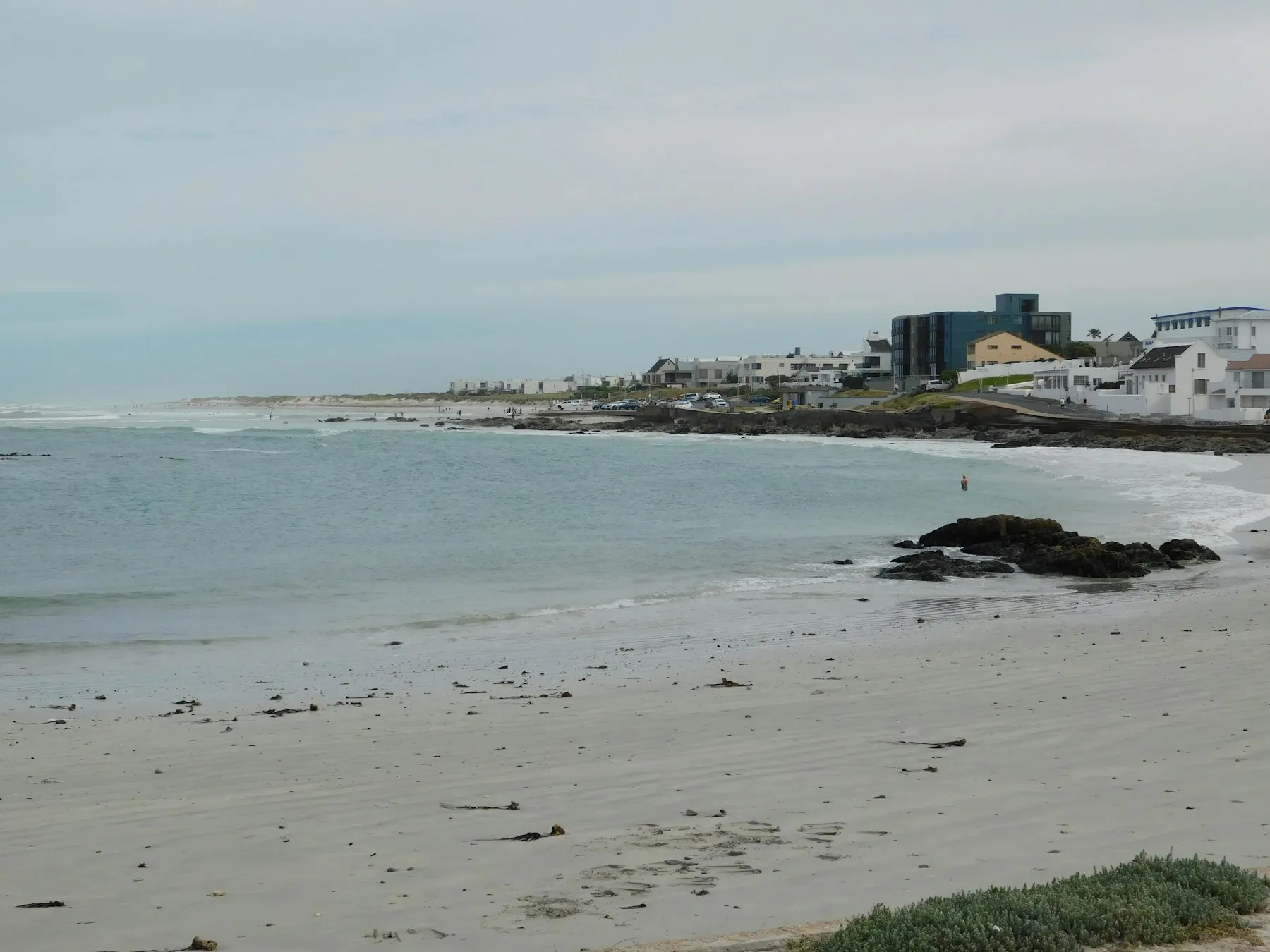
Houses along the beachfront on the Table Bay coastline

Waterproofing Table View

Waterproofing in Table View usually starts with corrosion rather than with water. Across the Table Bay frontage, salt goes after the fixings, the brackets and the flashings long before the roof itself. Free inspection, two-year written guarantee.

  • 18 years in trade
  • Two-year written guarantee
  • Free inspection

How It Works

  1. 1

    Free site inspection

    Fixings sampled, laps and flashings checked, gutters and wall elevations assessed.

  2. 2

    Written quote before work starts

    Repairs and coatings itemised separately.

  3. 3

    Work completed, system specified

    Correct-specification fixings for the sheeting, so the repair does not corrode again.

  4. 4

    Guarantee and follow-up

    Two-year written guarantee, plus a check after the first winter.

Table View housing is largely newer than the older suburbs, with a lot of metal roofing, tiled pitched roofs on estate housing, and contemporary low-pitch and flat sections. Most of what we attend here is corrosion and detailing rather than aged materials.

The Fixings Fail Before the Roof Does

On a metal roof, and there are many across Table View, the sheeting is the durable part. Chromadek and galvanised profiles hold up for a long time.

The roof is held down by hundreds of screws, and every screw is a hole deliberately punched through the waterproof layer, sealed by a small rubber or EPDM washer. Those washers are the shortest-lived component on the entire building. UV hardens them, thermal cycling works them loose, and a perished washer leaves an open hole.

Salt air makes it considerably worse in two ways.

General corrosion. Salt attacks the fixing at every point where the protective coating is broken, which is exactly where a screw has been driven and where the sheet has been cut.

Galvanic corrosion. Two dissimilar metals in contact with moisture between them means one corrodes preferentially, and salt-laden air is an efficient electrolyte. Use a screw not compatible with the sheeting on a Table View roof and the fixing eats itself while the sheet stays perfect.

The pattern we find is a roof leaking in twenty places, a homeowner being quoted for a full re-roof, and a sheet inspection showing the sheeting is fine. The answer is refixing with correct-specification screws and washers, sealing the laps, and reworking the flashings. It is a fraction of the cost of replacement, and it is what we quote when it is what the roof needs.

Everything else metal goes the same way. Gutter brackets, downpipe fixings, flashing edges, balustrade bases, awning fixings. Each is a small failure and collectively they are why a coastal building needs more frequent attention than an inland one.

Sand in the Gutters, Rain in Four Months

Two things about the local conditions catch people out.

Wind-blown sand. The summer south-easter carries sand off the Table Bay frontage and Big Bay across the whole area. It settles in gutters, valleys and flat roof outlets and forms a dense silt that holds moisture permanently against the metal and does not blow out again.

People here often assume gutters only need clearing if there are trees. There frequently are not, and the gutters are full anyway. Sand also blocks an outlet completely rather than partially, which is why flat roofs here can go from fine to flooded in a single front.

Concentrated rainfall. Roughly 70% of the annual total falls between June and September, and it arrives in fronts that deliver a large volume in hours. That makes capacity the governing factor in any gutter or drainage system, not durability. A sand-silted gutter has no spare capacity when the first front arrives, and undersized downpipes on newer estate housing are a recurring fault.

The winter wind direction matters too. North-westerly fronts come straight in off Table Bay at 50 to 65kph, so the seaward and north-west elevations take driven rain that the sheltered sides never see. Wall coatings on those elevations, already abraded by a summer of sand, are where penetrating damp starts.

Newer Housing, Newer Failure Modes

Much of Table View, Parklands, Sunningdale and Big Bay is relatively recent development, which shifts what goes wrong.

Contemporary low-pitch and flat sections on otherwise pitched houses, with the junction between the two being a common leak point.

Parapets and box gutters on modern elevations, which are detail-dependent and unforgiving.

Large glazed elevations and sliding doors facing the sea and the view, taking driven rain directly at the threshold and track.

Balconies over living space, with waterproofing under tiles that fails invisibly.

Estate housing built quickly and in volume, where the same detail is repeated across many units, which means a defect on one house is often a defect on the street.

Younger buildings mean warranties and defects may still be live, and it is worth establishing that before paying for repairs. We will tell you if what we are looking at appears to be a construction defect rather than wear.

Why Choose Us in Table View

  • We inspect before we quote

    Nobody prices a roof from a photograph or a phone call. We get on the roof or into the roof void, establish what is actually wrong, and quote from that.

  • Preparation is quoted separately

    Substrate repair, falls correction and strip-off appear as their own line items. That is the part that determines whether the work lasts, and the part most quotes hide.

  • We say when repair is the cheaper answer

    Plenty of roofs quoted for replacement need a day of repairs. We tell you which yours is, including when it means a smaller invoice for us.

  • Two-year written guarantee, in writing

    Minimum two years on our workmanship, with the scope set out on the quote before you sign. We check the work again after the first winter.

Waterproofing in Table View FAQs

How much does waterproofing cost in Table View?

On metal roofs it is usually driven by fixing count and flashing work rather than area, which is often much less than people expect. We quote fixings, flashings, gutters and any coating as separate items.

My metal roof leaks in many places but the sheets look fine. Do I need a new roof?

Probably not. Fixings and their washers fail long before sheeting does, and salt air accelerates it. Refixing with correct-specification screws, sealing laps and reworking flashings is a fraction of a re-roof.

Why do my roof screws corrode so fast here?

Salt air, which accelerates corrosion generally and galvanic corrosion between dissimilar metals specifically. Using a fixing incompatible with the sheeting means the screw corrodes while the sheet stays perfect.

I have no trees. Do my gutters still need cleaning?

Yes. Wind-blown sand off the Table Bay frontage fills gutters through summer and forms a dense silt that holds water against the metal. It is a bigger problem here than leaves are elsewhere.

Why did my flat roof flood in one storm when it was fine before?

Sand silts an outlet up solid rather than partially. Combined with Cape Town rain arriving in concentrated fronts, a blocked outlet means water rising over the upstands during a single storm.

My house is only a few years old and it is leaking. Is that normal?

No, and it may be a construction defect rather than wear, particularly on estate housing where the same detail is repeated across many units. We will tell you if that is what we are looking at, since it may be someone else responsibility.

Water comes in under my sliding doors in a storm. Why?

North-westerly fronts drive rain horizontally off Table Bay at gale force, pushing water up under the track rather than letting it drain. Perished sealant around the frame makes it worse.

Which elevation of my house needs the most attention?

The seaward and north-west faces. They take driven winter rain and summer sand abrasion that the sheltered elevations never see, so exposure is not even across a building.

When should work be done in Table View?

March and April. Gutters cleared of the summer sand, fixings and flashings sorted, and wall coatings done in dry conditions, all before the first front arrives.

Waterproofing in Table View, quoted in writing

Free site inspection, a written quote before any work starts, and preparation costed separately from the waterproofing.

  • We inspect before we quote, on the roof or in the roof void
  • Preparation and substrate work itemised separately
  • Two-year written guarantee
  • A check after the first winter
068 890 3548

Request a quote

Tell us what is happening and we will arrange the inspection.

No charge for the inspection, and no obligation.

Call for a free inspection