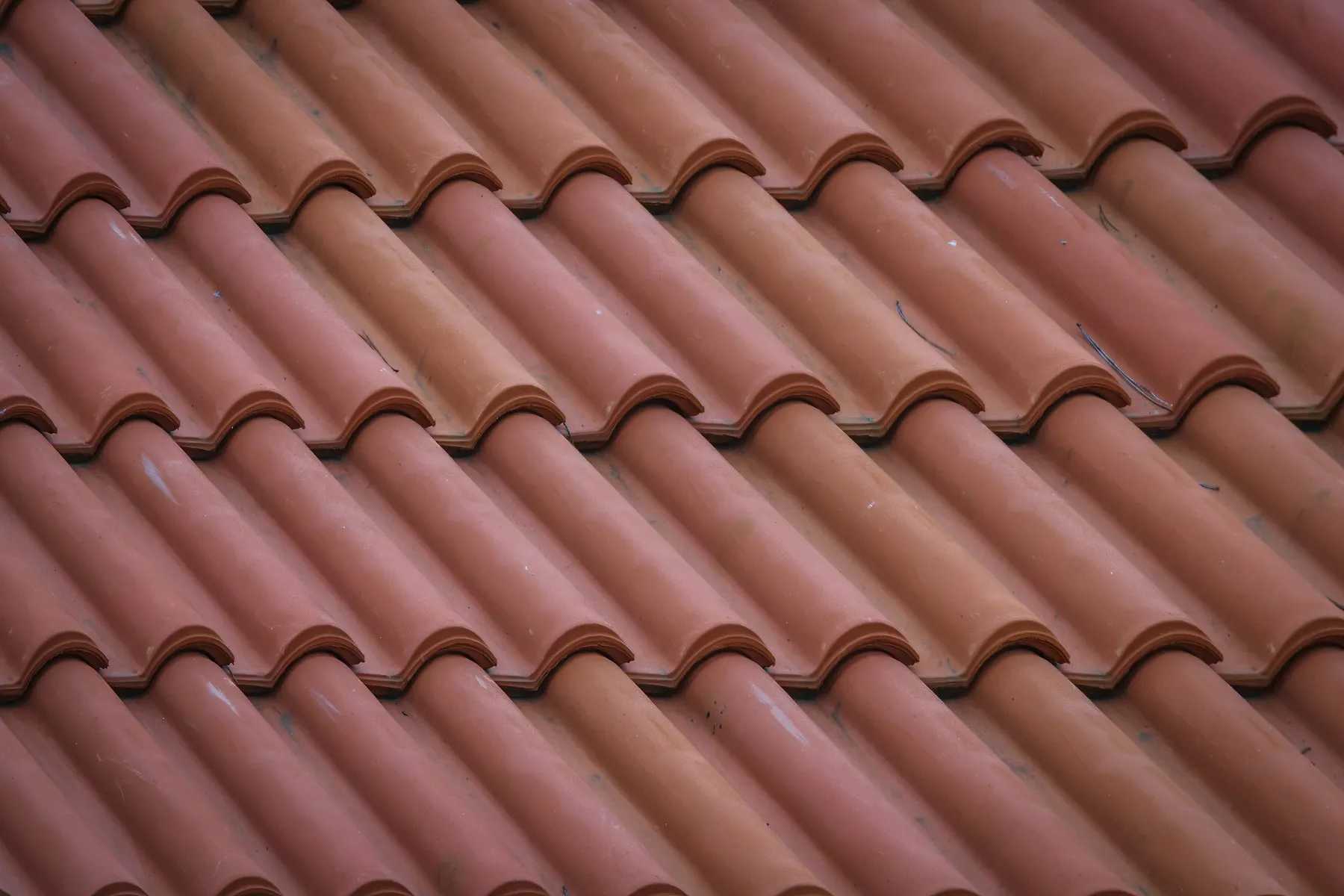
Close view of overlapping clay roof tiles

Tiled Roof Waterproofing Cape Town

Tiled roof waterproofing in Cape Town is where the most money gets wasted, because a tiled roof was never meant to be sealed. It sheds water. Coating it can make things worse. Free inspection, two-year written guarantee.

A Tiled Roof Is a Drainage System, Not a Sealed One

Tiles do not form a waterproof layer and were never intended to. They overlap so that water runs down the surface and off the edge, and a certain amount of wind-driven rain always gets past them. That is by design.

What stops that water reaching your ceiling is the underlay, the membrane sitting on the battens beneath the tiles. The underlay is the actual waterproofing on a tiled roof. The tiles are the weather shield that protects it from UV and impact.

This matters because of what people are routinely sold. A contractor offers to spray a sealant or a coating over the tiles to waterproof the roof. It looks like a solution. It is not.

Why Sealing a Tiled Roof Backfires

Coating over tiles does three things, and two of them are bad.

It traps moisture in the roof. A tiled roof breathes. Water vapour from the house rises through the ceiling into the roof void and out through the tile joints. Seal those joints and the vapour has nowhere to go. It condenses on the underside of the tiles and on the timbers, and you get rot and mould in a roof that was previously dry.

It hides the real fault. Almost all tiled roof leaks come from specific places: cracked or slipped tiles, failed ridge bedding and pointing, valleys, and flashings where the roof meets a wall or chimney. A coating over the top does not repair any of those. It covers them.

It fails in a way that is expensive to reverse. A coating that cracks and peels has to be removed before proper repairs can be done, and it takes tile surface with it. Roofs get replaced for this reason.

What actually waterproofs a tiled roof: intact underlay, sound bedding and pointing at ridges and hips, properly formed valleys, correct flashings at every abutment, and tiles that are whole and sitting where they should. That is the work.

Where Tiled Roofs Actually Leak

Ridges and hips. Old sand-cement bedding cracks and the pointing falls out. Flexible pointing compound is the modern fix and it moves with the roof instead of cracking.

Valleys. Where two slopes meet, water concentrates. Valley metal corrodes, debris collects, and the tiles either side get cut short or bedded badly.

Flashings. Every point where the roof meets a wall, chimney or parapet. Mortar fillets crack. Proper flashings chased into the wall do not.

Slipped and cracked tiles. Broken tiles let water straight onto the underlay, which is fine if the underlay is sound and a leak if it is not.

Failed underlay. Older roofs used bituminous felt that becomes brittle and tears at the battens. Once the underlay has gone, the roof relies entirely on tiles being perfect, which they never are.

Cape Town Tiled Roof Problem

Winter rain here arrives on north-westerly fronts at 50 to 65kph, which drives water horizontally under tile overlaps and up the slope. A roof that copes with vertical rain leaks in a front.

That is exactly why the underlay matters more in Cape Town than in a low-wind region. Wind-driven water getting past the tiles is normal and expected. Sound underlay makes it a non-event. Failed underlay makes it a ceiling stain.

The summer south-easter does its own damage, lifting and cracking ridge tiles with weak bedding, ready for the next winter.


How It Works

  1. 1

    Free site inspection

    Underlay condition assessed from inside the roof void, ridges, valleys, flashings and tiles checked from above.

  2. 2

    Written quote before work starts

    Repairs and any underlay work quoted separately.

  3. 3

    Repairs carried out

    Bedding and pointing, valley and flashing work, tile replacement, underlay repair or replacement where needed.

  4. 4

    Guarantee and follow-up

    Two-year written guarantee, plus a check after the first winter.

What Tiled Roof Waterproofing Costs

  • Whether the underlay needs replacing.The single biggest variable. Underlay replacement means stripping and re-laying tiles, which is a large job.
  • Ridge and hip lengthneeding re-bedding and re-pointing.
  • Valley and flashing work.Corroded valley metal and failed abutment detailing.
  • Number of tiles to replace,and whether matching tiles are available for older roofs.
  • Access and roof pitch.Steeper roofs need more safety provision and take longer.
Get a written quote

Why Choose Us

  • We inspect before we quote

    Nobody prices a roof from a photograph or a phone call. We get on the roof or into the roof void, establish what is actually wrong, and quote from that.

  • Preparation is quoted separately

    Substrate repair, falls correction and strip-off appear as their own line items. That is the part that determines whether the work lasts, and the part most quotes hide.

  • We say when repair is the cheaper answer

    Plenty of roofs quoted for replacement need a day of repairs. We tell you which yours is, including when it means a smaller invoice for us.

  • Two-year written guarantee, in writing

    Minimum two years on our workmanship, with the scope set out on the quote before you sign. We check the work again after the first winter.

Tiled Roof Waterproofing FAQs

How much does tiled roof waterproofing cost in Cape Town?

It depends almost entirely on whether the underlay has failed. Repointing ridges and replacing broken tiles is modest. Stripping the roof to replace underlay is a major job. We assess the underlay before quoting.

Should I have my tiled roof sprayed or sealed?

We do not recommend it. Sealing the tile joints traps moisture in the roof void, causes condensation on the timbers, and hides the faults that are actually leaking. It also makes future repairs harder.

What actually waterproofs a tiled roof?

The underlay beneath the tiles, plus sound ridge bedding and pointing, properly formed valleys and correct flashings. The tiles shed water and protect the underlay from UV.

Why does my tiled roof only leak in a storm?

Wind-driven rain gets under the tile overlaps, which is normal. If it reaches your ceiling, the underlay has failed or a flashing has. A cold front at 60kph will find that where ordinary rain will not.

My ridge tiles are cracking. Is that serious?

It is one of the most common leak sources on a tiled roof. Old sand-cement bedding cracks and the pointing falls out. Flexible pointing moves with the roof instead of cracking again.

Can you replace the underlay without removing all the tiles?

Not properly. The underlay sits under the battens and tiles, so it requires stripping the affected area. Partial replacement is possible on a section, but a whole-roof underlay failure means a whole-roof strip.

Can you match my old roof tiles?

Often, but not always. Discontinued profiles and colours are a real problem on older Cape Town homes. Where matching is impossible, we discuss options before starting rather than after.

What about the roof paint I keep being offered?

Roof paint improves appearance and gives some UV protection. It does not waterproof and it does not fix a ridge, a valley, a flashing or an underlay. Sold as waterproofing, it is misleading.

Do I need to be home for the work?

For most repairs, no. Underlay work means access into the roof void, so we arrange that with you in advance.

Free inspection, written quote, no obligation

We come out, establish what is actually wrong, and put it in writing with preparation costed separately from the waterproofing.

  • We inspect before we quote, on the roof or in the roof void
  • Preparation and substrate work itemised separately
  • Two-year written guarantee
  • A check after the first winter
068 890 3548

Request a quote

Tell us what is happening and we will arrange the inspection.

No charge for the inspection, and no obligation.

Call for a free inspection