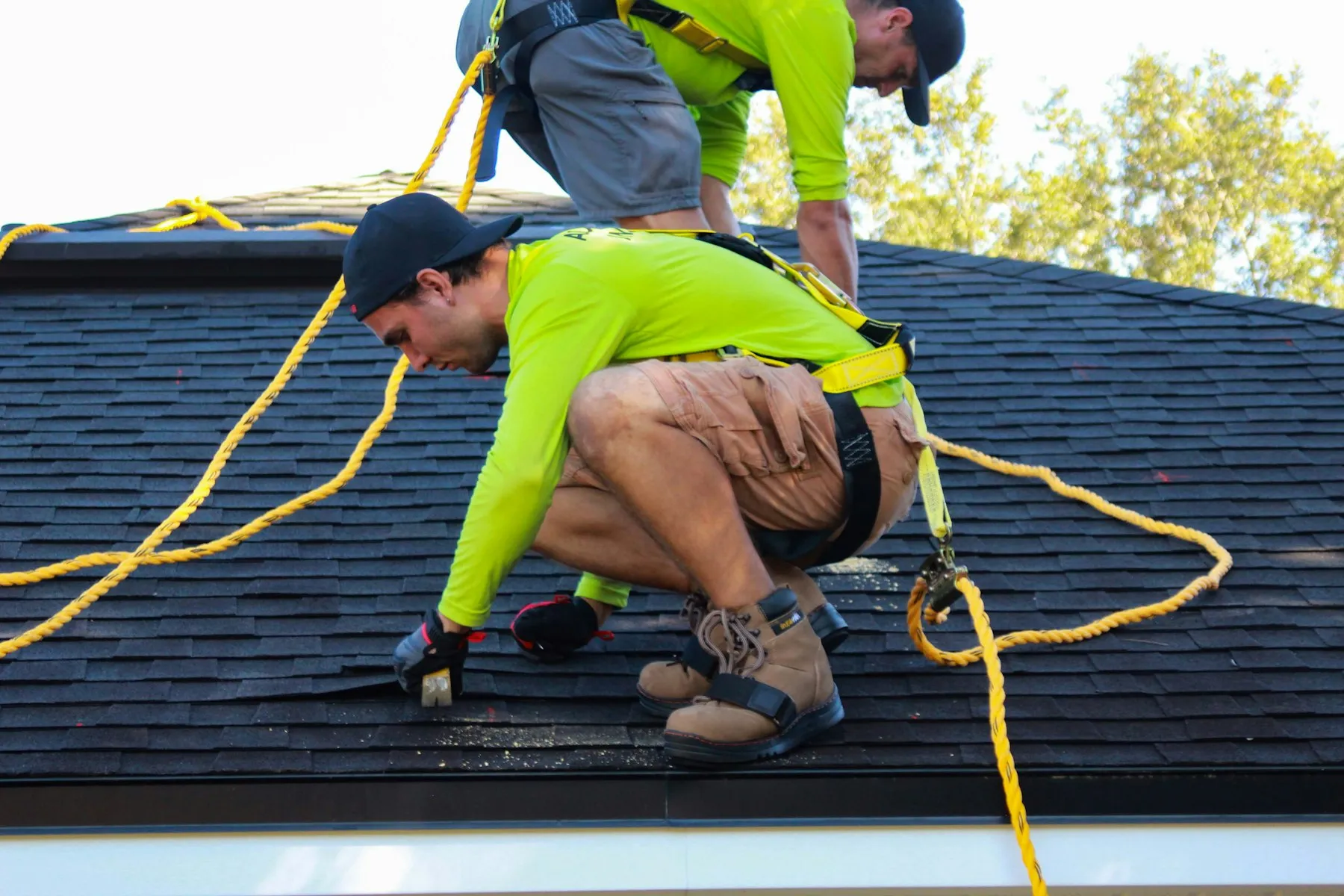
Rarely a New Roof
A metal roof that leaks in a dozen places looks like a roof at the end of its life. Usually it is a roof with a dozen failed fixings and a couple of tired flashings.
IBR, corrugated and Chromadek sheeting is durable. What fails first are the parts that hold it down and join it together: the screws and their washers, the laps between sheets, and the flashings at the ridge, walls and edges. All of that can be repaired without touching sound sheeting.
Sheets do reach the end of their life, mostly near the sea and mostly in predictable places. The bottom edges where water and salt sit longest. Around fixings. Anywhere a cut edge or a scratch broke the coating. A sheet rusted through gets replaced. The sheets around it, still sound, stay.
We tell you which sheets are finished and which are not, including when that makes for a much smaller quote.
What We Repair on Metal Roofs
Rusted and perforated sheets, replaced individually, matched to the profile and lapped into the sheets either side.
Failed fixings, replaced with screws and washers compatible with the sheeting, fixed through the crown of the profile and tightened to seal, not crush.
Loose and lifting sheets, refixed into sound purlins before the wind takes them further.
Laps, resealed where wind-driven rain is getting through, particularly end laps on low-pitch roofs.
Flashings and cappings at the ridge, barge, walls and around penetrations, reworked or replaced.
Surface rust on sheeting that is still sound, treated and primed before it goes further.
Penetrations for vents, flues and solar mounting, resealed and flashed properly.
How Metal Roof Repairs Go Wrong
The wrong screw. A fixing that is incompatible with the sheet sets up galvanic corrosion, and near the coast it corrodes quickly while the sheet around it stays sound.
Over-tightening. A screw driven too hard dimples the sheet and crushes the washer, so water ponds around the fixing and gets in.
Sealant instead of repair. A blob of sealant over a rusted hole or a lifted lap looks fixed from the ground. It weathers in the sun and lets go in the first front.
Cutting sheets on the roof with a grinder. Hot swarf lands on the surrounding sheets and rusts into the coating, leaving rust spots across a roof that was fine.
Walking the wrong part of the sheet. Stepping between purlins dents the profile and leaves low spots that hold water.
Salt, Wind and the Cape Town Metal Roof
Coastal salt is the corrosion driver, and it reaches well inland on the wind. Table View, Blouberg, Milnerton and the Atlantic Seaboard sit in it all year. The parts of the roof that rain does not wash clean, under laps and on sheltered overlaps, corrode first.
The summer south-easter works at loose sheets and lifts edges with failed fixings. The winter north-wester then drives rain uphill through end laps and under flashings at 50 to 65kph.
A metal roof repaired in March or April goes into winter with every fixing tight and every lap closed.