A Flat Roof Is Not Meant to Be Flat
Every flat roof is built with a slope. The industry standard is a minimum fall of 1 in 80, and in practice you want closer to 1 in 60 to allow for deflection and screed tolerance. Below that, water sits.
Most Cape Town flat roofs that leak repeatedly have lost their falls. The screed was laid short of specification, the slab has deflected over decades, an outlet has been moved, or a later addition blocked the run. The roof now holds water for days after rain instead of clearing in an hour.
Every waterproofing system on the market performs worse under standing water. Seams stay wet, UV and water work together on the surface, silt collects and holds moisture against the membrane permanently. A system rated for ponding will survive it. It will still fail sooner than the same system on a roof that drains.
Falls and Drainage Before Any Membrane Goes Down
When we inspect a flat roof, the first thing measured is where the water goes.
Falls. A hose test or a level survey shows the low points. If the roof holds water 48 hours after rain, that is a drainage problem being sold as a waterproofing problem.
Outlets. Number, position and size. A large roof with one small outlet cannot clear a Cape Town winter downpour, and water backs up over the upstands. Outlets belong at the low points, and there should be an overflow.
Silt and debris. Blocked outlets are the most common cause of ponding we find, and the cheapest to fix.
The fix. Where falls have been lost, a screed to fall or a tapered insulation layer corrects the slope before any membrane goes on. It is real cost, and we quote it separately so you can see it rather than discovering it later.
If a contractor quotes your ponding flat roof without mentioning falls, they are quoting to waterproof a puddle.
Which System for a Flat Roof
Torch-on. The workhorse. Tough, takes foot traffic, tolerates standing water better than most. Best on concrete decks.
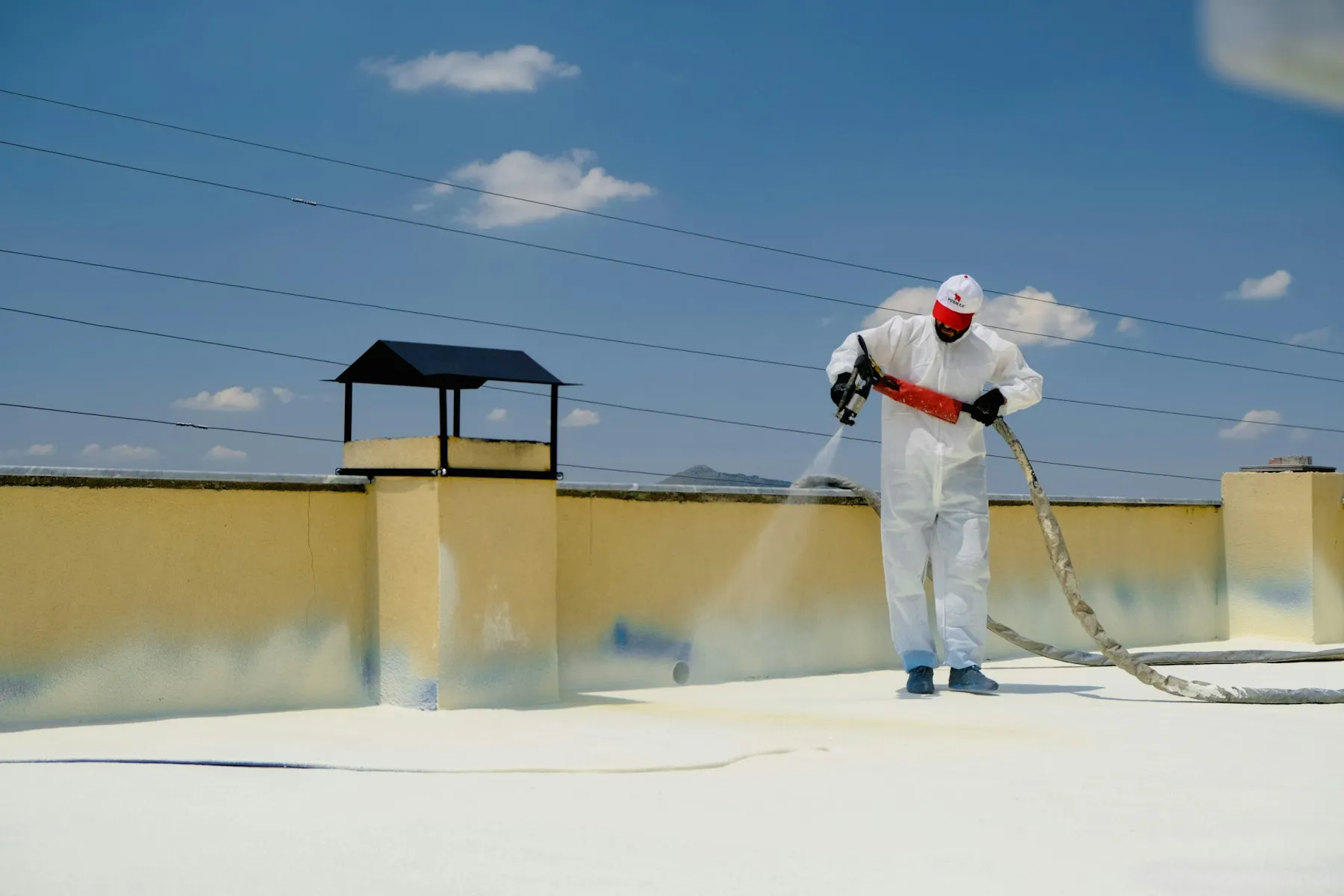
Liquid membrane. Seamless, so better where the roof has many penetrations, plant plinths or awkward junctions. Needs correct film thickness.
Walkable or tiled decks. Need a membrane rated for the covering above and a drainage layer that actually drains.
The deck type, the traffic and the detailing count decide it, not the price per square metre.
Cape Town Winter and the Flat Roof
Roughly 70% of Cape Town rain falls June to September, and it arrives fast. A cold front dumps a large volume in a short window rather than drizzling it over a day.
That is the worst case for a flat roof, because capacity matters more than total. An outlet sized for average rainfall backs up under a front, water rises above the upstand height, and it enters over the top of a membrane that is perfectly sound.
The north-westerly wind driving that rain adds the second problem. Sideways rain hits parapet copings and upstands, which is why the vertical detailing on a flat roof does more work in Cape Town than the flat field does.